
Fire protection built into the building.
Passive fire protection keeps fire and smoke inside the compartment where they start and protects the structure that holds the building up, giving people time to get out and firefighters time to act. It is part of the building and works without power, detection or activation.
Three weak points in a building. Three ways we protect them.
Fire-rated walls and floors divide a building into compartments, and the structure holds it all up. Fire attacks both: up hidden facade cavities, into the steel and concrete frame, and through the gaps around services.
Up the facade
A facade cavity can run the full height of the building. Cavity barriers close it at every floor.
Facade cavity barriersInto the structure
Heat weakens unprotected steel and damages concrete. Fire retardant coatings insulate both so the structure holds for longer.
Fire retardant coatingsThrough service openings
Every pipe, cable and duct that crosses a fire-rated wall or floor leaves a gap. Firestop seals it.
Firestop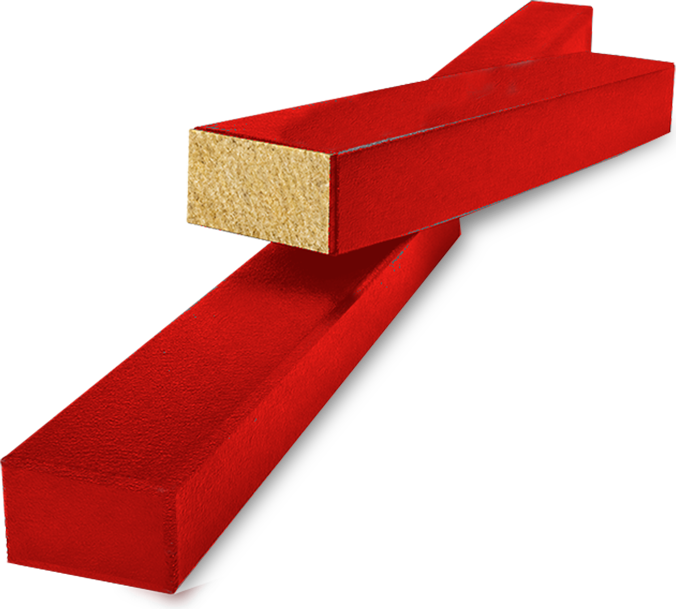
Facade Cavity Barriers
Up to 240 minutes fire rated, for ventilated and non-ventilated facades.
Rainscreen and clad facades have a cavity between the cladding and the wall behind it. A fire that gets into that cavity can travel up the building behind the cladding, out of sight. Cavity barriers close the cavity at each floor line and at compartment walls.
Two types
- Ventilated (open state). Leaves an air gap open in normal use. When heated, its intumescent strip expands and closes the gap.
- Non-ventilated (closed state). Fills the cavity completely, from the wall to the cladding.
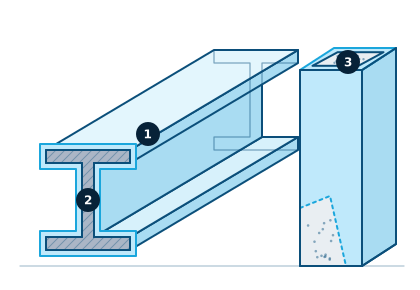
- 1Coating
- 2Structural steel
- 3Concrete
Fire Retardant Coatings
Protect structural steel and concrete so the building keeps standing for longer in a fire.
In a fire, unprotected steel heats up quickly and loses strength, and concrete can crack and spall. A fire retardant coating insulates the member and slows the rise in temperature, so it keeps carrying its load for longer.
Where it is used
- Structural steel. Beams, columns and bracing.
- Concrete. Slabs, walls and columns.
- Standards. BS 476, ISO 834 and other relevant standards.
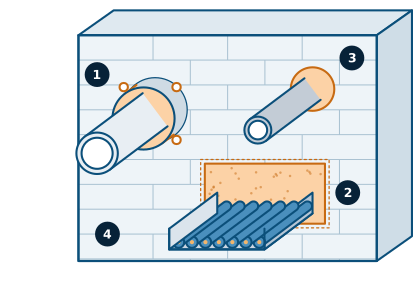
- 1Pipe collar
- 2Cable transit seal
- 3Pipe sealant
- 4Fire-rated wall
Firestop
Seals the openings that services cut through fire-rated walls and floors.
Every pipe, cable and duct that passes through a fire-rated wall or floor leaves a gap around it. Left open, that gap lets fire and smoke straight into the next compartment. Firestop seals it so the wall or floor keeps its fire resistance.
Where it is used
- Plastic and metal pipe penetrations
- Cable and cable tray penetrations
- Duct penetrations
- Construction joints in fire-rated walls and floors